There’s something about being on the road that always resets me. Maybe it’s the way the world outside the window slowly changes, or the quiet hum of the engine underneath life’s conversations. When I decided to explore Lombok last month, I didn’t want a packed itinerary or resort-style tour—I wanted to feel the island. And for that, I needed wheels. Not just a car, but someone who knew the roads, the stories, the small food stalls with the best ayam taliwang, and the moments worth slowing down for.
I didn’t realize it at the time, but that choice—to go by car, guided by a local—was the best decision of the trip.
The Beginning: Mataram to the Mountains
The trip began in Mataram, the heart of the island. My driver, Awan, met me right at the guesthouse. Warm smile, perfect English, and a playlist that shifted from reggae to soft gamelan without missing a beat.
Our route? Nowhere fixed. Just a general loop starting from the west coast, into the highlands, then tracing the shoreline down to the south. It wasn’t about ticking off tourist spots—it was about feeling the island breathe.
The first stretch took us up toward Pusuk Pass. As the road climbed higher, monkeys began appearing along the roadside, lounging lazily or waiting for snacks. But what struck me most wasn’t the monkeys—it was the silence. No honking, no rush. Just dense forest hugging the asphalt, sunlight filtering through in slow waves.
We pulled over at a bend with an open view—rolling green hills and the outline of Gili islands shimmering far away. Awan told me that many locals come here to pray before big journeys. I understood why. The land itself felt sacred.
Hidden Villages and Coffee Breaks
As we descended toward the northern villages, Awan asked, “Do you want to stop for local coffee?” He didn’t mean Starbucks.
We turned off the main road into a tiny kampung where a woman brewed coffee over firewood. It came in a chipped mug, black and rich, served with fried bananas and laughter. We sat on a bamboo porch overlooking a small rice field, chickens pecking around our feet.
That moment wasn’t in any brochure. But it’s the one I still think about the most.
Driving in Lombok isn’t just about the scenery—it’s about access. Access to real moments, to places you wouldn’t find without a local. Every turn Awan made felt intentional, like he knew where the road wanted to go before it told him.
Coastline Dreams: Malimbu to Selong Belanak
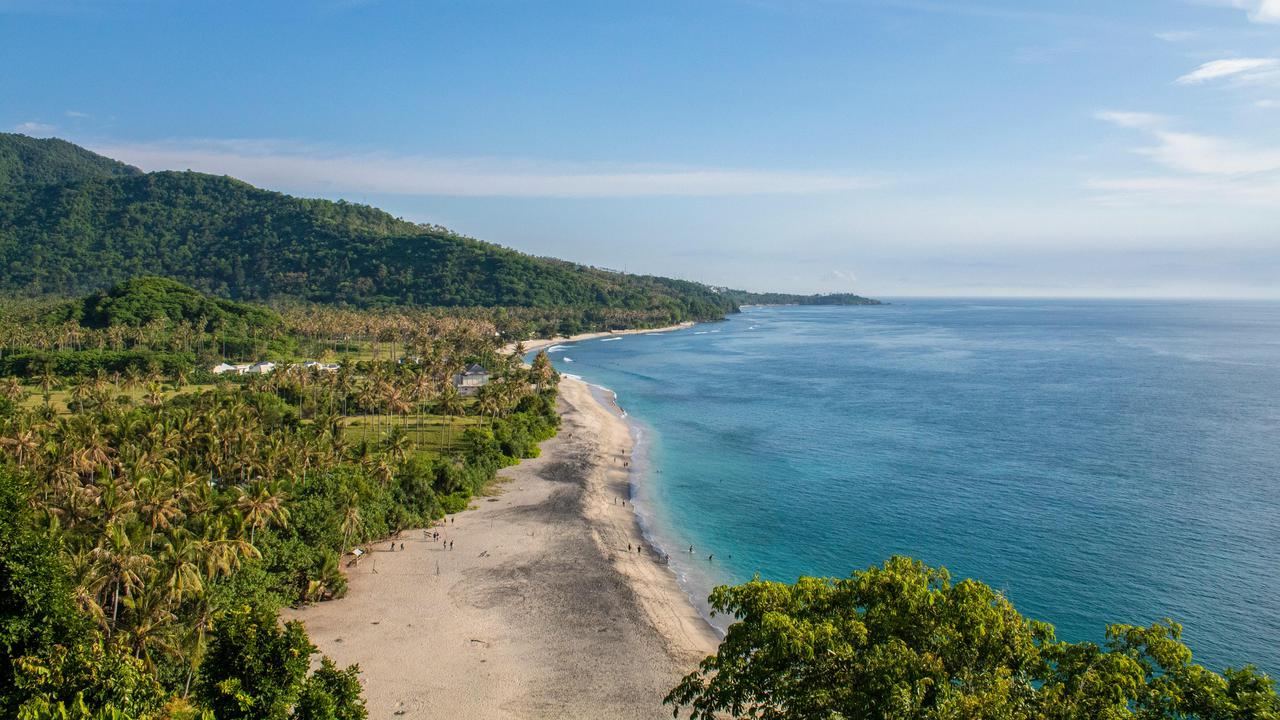
From the mountains, we curved down to the coast again, past Senggigi, past the touristy cafés, and on to Malimbu Hill. This spot deserves every photo it gets—but what the photos don’t show is how quiet it can be in the early morning. We got there just after sunrise. The sky was pink, the sea glassy, and we were the only ones around.
Down the winding coastal road, the island kept opening up—little warungs by the sea, cliffside views that made you stop mid-sentence, and kids waving from their front yards like we were celebrities.
By the time we reached Selong Belanak, the mood shifted. The beach here is wide, calm, with waves that roll slow and even. It’s a surfer’s beginner paradise, but even if you don’t surf, just sitting on the sand watching locals teach their kids to ride waves is enough to keep you there for hours.
We stayed for lunch—grilled fish caught that morning, eaten under a thatched roof with our feet in the sand. No WiFi, no distractions. Just good food and honest company.
The Freedom of a Private Car in Lombok
I’ve done public transport in Java. I’ve rented motorbikes in Bali. But here in Lombok, the pace is different. The landscapes are spread out, the weather can turn quick, and the most rewarding places are often tucked beyond a narrow path or hidden behind a hill.
Having a private car with a local driver wasn’t about comfort—it was about immersion. I could stop whenever I saw something interesting: a farmer harvesting rice, a buffalo crossing the road, a school performance spilling into the street. No schedule, no pressure. Just possibilities.
There was a moment, somewhere between Kuta and Tete Batu, where the road curved around a hill and opened up into a view of rice terraces bathed in golden afternoon light. I told Awan to stop. We didn’t speak for a while. Just stood there watching farmers silhouetted against the sun.
“This is why I never get tired of this job,” he said quietly.
And I got it.
Cultural Detours and Sacred Places
We made detours too—some planned, some spontaneous. In Sade Village, I learned how traditional Sasak houses are built using buffalo dung and rice husks. In Banyumulek, I tried my hand at spinning pottery, though my lump of clay ended up looking more like a collapsed donut than a vase.
Awan introduced me to a street vendor who sold sweetened roasted corn near Masbagik, and to a woman who makes handmade songket fabrics in her own backyard. Not once did I feel like a tourist. I felt like a guest.
Evenings were often slow drives under soft streetlights, windows down, the smell of grilled satay drifting in. These weren’t luxury experiences—they were something better: real.
Planning Your Own Island Road Trip
If you’re thinking of doing a road trip across this island, don’t just rent a car and rely on Google Maps. Trust me, you’ll miss the point. The value is in the connection—with the land, the people, and the stories behind every turn.
Whether you’re heading for the southern surf beaches, the northern jungle retreats, or east toward Pink Beach, there’s a rhythm to driving here that doesn’t exist anywhere else. It’s part winding road, part whispered legend, part spontaneous detour.
That’s why if you’re searching for an authentic Lombok drive, it makes all the difference to go with someone who lives it.
Not just a driver. A storyteller. A companion. A local who knows where the mangoes are ripest, where the clouds look best at sunset, and when to turn off the engine and just sit with the view.